Birdwatching at the Charles River

Work has finally slowed down enough for me to take my walk at lunch again. Today was a little overcast, and much cooler than it has been, but it was good to get some fresh air.

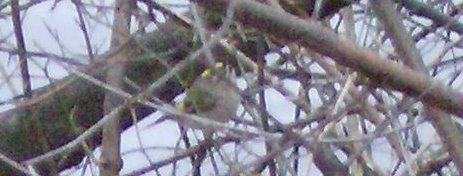
I walk along the Charles River and have a 45-minute loop that I do. Now that I'm actively looking for birds, I've learned where to spot certain ones. The path at the beginning of my walk cuts down close to the river and I've decided that's my best bet for seeing interesting birds. It's overgrown and there are plenty of places for them to hide. On the first part of my walk I saw several titmice, a flicker, chickadees and house sparrows. Later in the walk I saw what I believe was a pair of warblers. I've seen this bird before on my walks along the river, and it's the first that I've tried identifying. This was the best picture I could get today, and although it's hard to tell, it has yellow markings on the crown and black and white feathers on the wings. I'll do a little more research to try and figure out exactly what kind it is, but I'm welcome to suggestions too.

I have an excellent little bird guide from 1909, written by Charles Reed of Worcester, MA. The title is Land Birds Bird Guide Song and Insectivorous Birds East of the Rockies. There are pages and pages of warblers in there and I think that's my best bet.


Comments

Popular posts from this blog

Difference Between Grackles and Starlings

I saw a sad sight today during my lunchtime jog—a dead grackle. Or was it a starling? I'll get to that in a minute. I was making my way down to the trail along the Charles River when I saw what I thought was an injured bird in the middle of the road. It was just sitting there and I figured it was just stunned or maybe had an injured wing. The bird probably didn't have much of a chance, but the least I could move it out of the road. As I got closer to the bird I saw it had its mouth open and then I realized the gruesome truth—it was dead and was frozen in that position. I just got shivers thinking about it. The poor thing. Anyway, so it got me to thinking 'What is the difference between grackles and starlings?' I use the two interchangeably and haven't really made an effort to sort it out. Until now. I like to use All About Birds from the Cornell Lab of Ornithology as an online resource. The site is comprehensive and easy to use. (I also really like the 'Cool ...

Using Birds to Control Tomato Hornworms

Here's a lovely macro shot of a tomato hornworm caterpillar taking a little break from gorging himself on my tomatoes. Ever seen one before? They're huge and pretty startling to come across when you're pruning your tomato plants. They blend right in, until you accidentally touch one- hopefully not with the horned end! This picture was taken near the end of the season so I wasn't SO upset, but I definitely want to prevent hornworms for next season. I started doing some research on how to get rid of tomato hornworms and the good news is you don't need to use insecticides or crazy home remedies- birds will do the work for you! This great website I found- the Yardener has a whole section about insect pests in the vegetable garden. According to the site, feeding birds year-round will help you control the tomato hornworm problem in your garden. For bird lovers, this shouldn't be a chore at all. Just keep your feeders full with desirable seed like black-oil sunflower s...

Large-billed Crow pictures from Japan

These large-billed crow pictures come courtesy of my work colleague Phil who lives in Japan. He told me he had some great Japanese crow pictures, and the first thing I noticed about the bird was the large bill. I started doing some research to come up with the correct crow name. First I thought it was a carrion crow since those are a common type of Japanese crow, but the bill wasn't big enough. Then I found pictures of the large-billed crow and those were a match! Duh- "large bill"- it couldn't have been any simpler. These crows are also called jungle crows, but most of the birding sites call them large-billed crows. Phil said they can get really big, which I believe since American crows are huge sometimes. I have vivid memories of standing my in my parents Cape Cod kitchen doing dishes and getting spooked by something huge in my periphery on the deck. All it ever was was a giant crow, but really they can be scary when they get so big! Here are some interesting thing...