
These Great Blue Heron pictures were taken at Carver Pond on Memorial Day Weekend. We stayed in Bridgewater to avoid traffic and decided to take advantage of all of the wonderful parks in the are. (Earlier this day we went to the Tuckerwood Conservation Area, and then went directly to Carver Pond.)


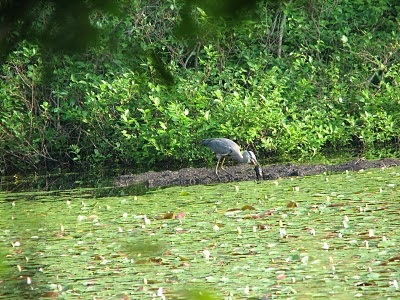
 Anyone want to take a guess at what kind of fish it's eating? I haven't a clue, but I do know it's huge! I would never expect to see a great blue heron eating a fish that large, but that just goes to show how much I know about great blue heron eating habits.
What's funny is that I wasn't even trying to sneak up upon this great blue heron eating its dinner. I was simply walking down to the water to (yes- this is gross) wash off the mess of a mosquito I squashed on my leg that happened to be full of my blood- yuck. Once I was down at the water's edge I saw the great blue heron across the way and of course whipped out my camera.
For those of you local to Massachusetts, here are some links about fishing and visiting Carver Pond (but be forewarned that you'll have to compete with these great blue herons!):
http://www.fishingworks.com/lakes/massachusetts/plymouth/bridgewater/carver-pond/
http://www.hookandbullet.com/fishing-carver-pond-bridgewater-ma/
http://www.bridgewaterma.org/Government/Commissions/PSC/Parks.shtml


 Anyone want to take a guess at what kind of fish it's eating? I haven't a clue, but I do know it's huge! I would never expect to see a great blue heron eating a fish that large, but that just goes to show how much I know about great blue heron eating habits.
What's funny is that I wasn't even trying to sneak up upon this great blue heron eating its dinner. I was simply walking down to the water to (yes- this is gross) wash off the mess of a mosquito I squashed on my leg that happened to be full of my blood- yuck. Once I was down at the water's edge I saw the great blue heron across the way and of course whipped out my camera.
For those of you local to Massachusetts, here are some links about fishing and visiting Carver Pond (but be forewarned that you'll have to compete with these great blue herons!):
http://www.fishingworks.com/lakes/massachusetts/plymouth/bridgewater/carver-pond/
http://www.hookandbullet.com/fishing-carver-pond-bridgewater-ma/
http://www.bridgewaterma.org/Government/Commissions/PSC/Parks.shtml
Comments
@fishing report: You're absolutely right- the impact of the oil spill on wildlife needs to have a bigger presence in the media. It's really sad how little coverage (and celebrity support!) it's gotten. Thanks for stopping by my blog.