
 I have been so busy planning my September 10th wedding but that's no excuse for slacking on posting the rest of my pictures from our amazing trip to Washington State and Vancouver.
So far I've done just one post from that trip- my Pigeon Guillemot pictures. But I have many more pictures from that trip to Hope Island, including these up-close-and-personal pictures of American Bald Eagles.
Hope Island is the ideal bald eagle habitat. It's an isolated state park, accessible only by boat and as a result it's a "natural area preserve to protect a rare Puget Sound ecosystem," according to the Washington State Parks website. We'll attest to that- the island is really remarkable. We walked around the entire thing, and there were so many different habitats there- meadows, forests, fields, rock outcroppings, and sandy beaches.
We first encountered the bald eagles first in the meadow high atop the bluff overlooking the water below.
 Then as we made our way to the other side of Hope Island we cut down from the trail to a sandy beach in a little cove below. Then we started noticing the bald eagles flying above and looked up to realize they were roosting in the trees. We counted a total of 4 but I'm sure there were more we couldn't see.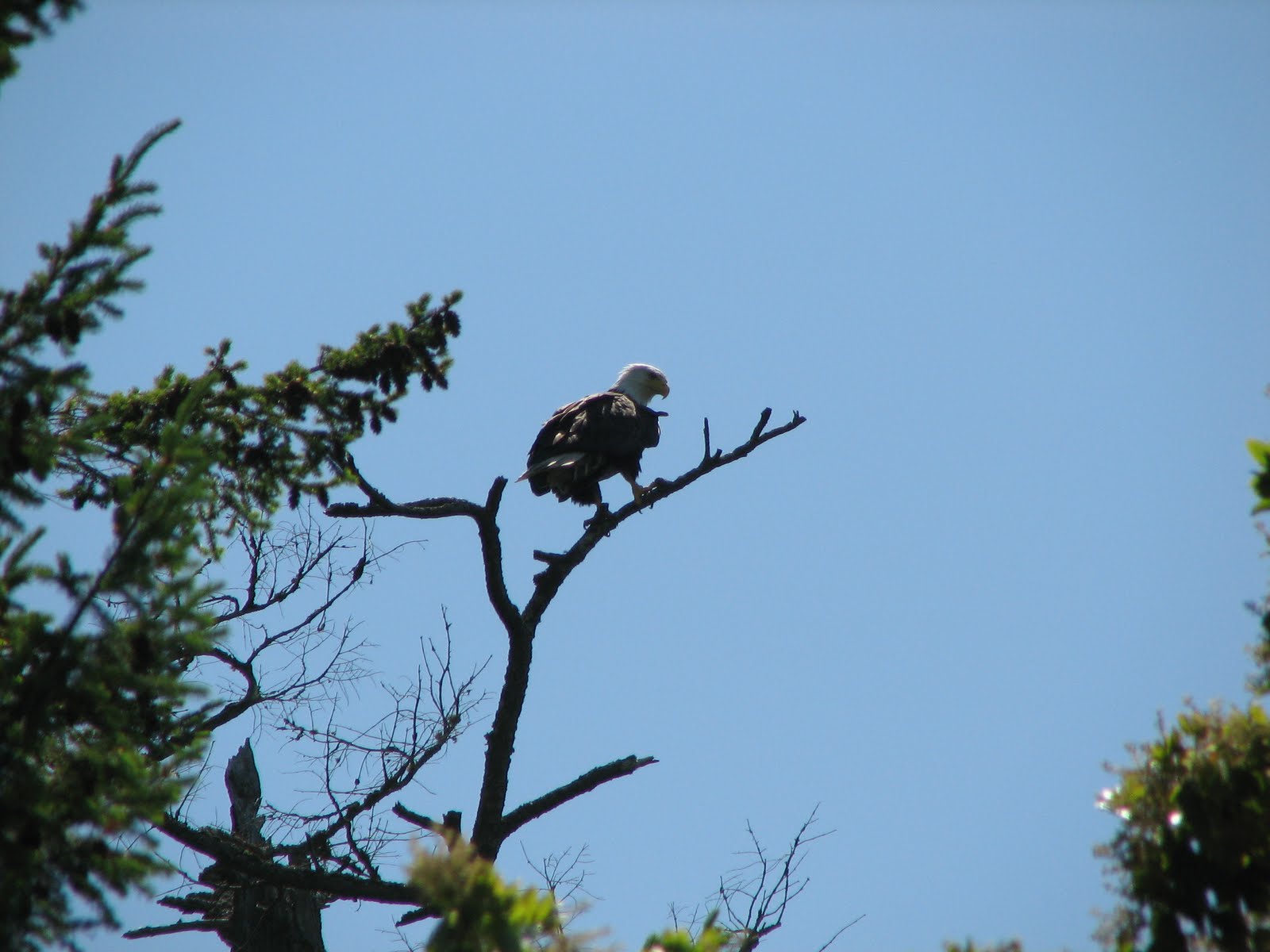

That sandy beach was a perfect habitat for them- they had their own private fishing hole. We actually watched as one of them dove down to snatch a small fish. In the shallow water Steve noticed one of the fish that got away- floating in the water with talon marks on its body.

 Note: for more information about visiting Hope Island go here: http://www.parks.wa.gov/parks/?selectedpark=Hope%20Island%20%28Skagit%29&subject=all
Make sure you look up Hope Island in Skagit County not Mason County. I'm realizing there are two Hope Island State Parks in Washington, and Google Maps isn't very good at pulling up both. (Use the map in my pigeon guillemot post, not the one that comes up when you Google it.)

 Note: for more information about visiting Hope Island go here: http://www.parks.wa.gov/parks/?selectedpark=Hope%20Island%20%28Skagit%29&subject=all
Make sure you look up Hope Island in Skagit County not Mason County. I'm realizing there are two Hope Island State Parks in Washington, and Google Maps isn't very good at pulling up both. (Use the map in my pigeon guillemot post, not the one that comes up when you Google it.)
Comments